


Newsletter
In this issue
-

In the contents of issue 16 of the ICR newsletter:
- Funding opportunities
- Recent publications
- Job offer in the ICR
- PhD Defenses
- They joined the ICR
- Symposium
- Management department
- In brief
Season’s greetings!
CNRS support for the coordination of Horizon Europe collaborative projects The AMORCE call for proposals aims to support researchers and teacher-researchers from CNRS research units who intend to submit a collaborative project as coordinator within the Horizon Europe framework. Proposals must be coordinated by a CNRS researcher or a teacher-researcher affiliated with a CNRS UPR, UAR, UMR, or IRL, whether or not the laboratory is administratively managed by the CNRS. Submission deadline: January 30, 2026
Interdisciplinary Approaches to Oncogenic Processes: Functional Exploration of the Microenvironment of Poor-Prognosis Cancers (MCMP) The objective is to fund interdisciplinary or multi–intra-disciplinary projects (involving several very different sub-disciplines within the same discipline) aimed at the functional characterization of the microenvironment of poor-prognosis cancers. The goal is to better understand the role of the tumor microenvironment in the development of cancers for which therapeutic options are limited and which are characterized by a standardized net survival rate of less than 33% five years after diagnosis. Submission deadline: February 26, 2026
CNRS NOEMI position: Electronics Engineer (Ingénieur d’étude) to support ICR EPR activities Application deadline: January 15, 2026
Louis HOSPITAL will defend his doctoral thesis on December 18, entitled “Synthesis of Contrast Agents for Overhauser-Enhanced Magnetic Resonance Imaging.” The examination committee is composed of Simonetta GENINATTI CRICH (University of Torino), Samir ACHERAR (Université de Lorraine), Jean-Michel FRANCONI (Université de Bordeaux), Gérard AUDRAN (Thesis Co-supervisor), and Sylvain MARQUES (Thesis Supervisor).
Maëva PELOILLE has joined the CROPS team as a postdoctoral researcher, working with Yohann Guillaneuf and Jean-Louis Clément to study the reactivity of azido-triazines and to synthesize new derivatives for the upcycling of polyolefins. Maëva holds a Master’s degree in Green Chemistry from the University of Strasbourg and a PhD in polymer chemistry from the University of Bordeaux. Her doctoral work, supervised by Stéphane Grelier and Henri Cramail (LCPO), focused on the chemical modification of lignin for emulsion stabilization.
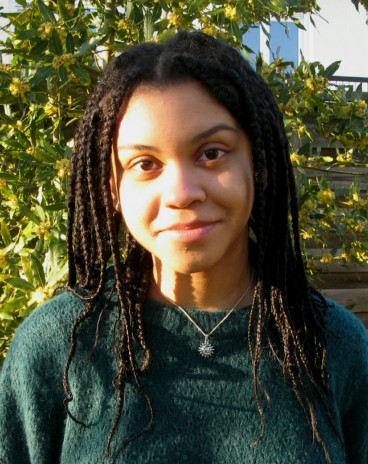
Ritama Kar has joined the CT team for a postdoctoral stay under the supervision of Mario Barbatti. Her research focuses on accelerating hybrid TDDFT-based nonadiabatic dynamics. Ritama earned her B.Sc. and M.Sc. degrees in Chemistry from the University of Calcutta, India. She obtained her Ph.D. from the Indian Institute of Technology Kanpur, India, under the supervision of Prof. Nisanth N. Nair. Her doctoral thesis was entitled Ab Initio Molecular Dynamics with Hybrid Density Functional Theory.
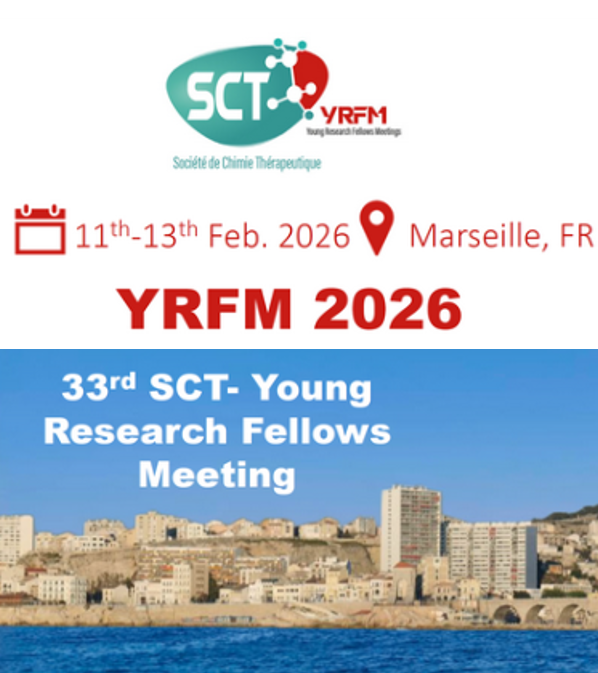
33rd Young Research Fellows Meeting (YRFM) from the Société de Chimie Thérapeutique February 11–13, 2026, Marseille This conference is organized and supported by the ICR. This event, dedicated to showcasing the work of young researchers, brings together exceptional young scientists and world-renowned experts to discuss cutting-edge research in medicinal chemistry. (Single price: €60)
Organic Chemistry Study Week (SECO 63) Argelès-sur-Mer May 17–22, 2026
Thank you for no longer using Notilus AMU starting Friday, December 19 at 4:00 p.m. Continuing to use it after this time may cause malfunctions.
Fundings opportunities
Recent publications
Job offer in the ICR

PhD defenses
They joined the ICR
Congress – Symposium
Congress reserved for students
Management Department
In brief
-
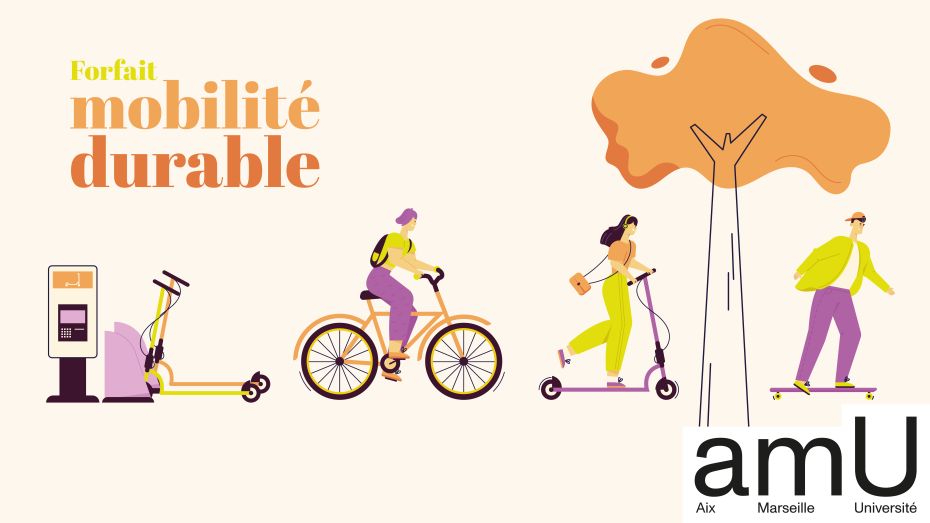
The application campaign for FMD is reopened!
The Sustainable Mobility Allowance (Forfait Mobilités Durables – FMD) is a financial support scheme for staff commuting between home and work. This program aims to encourage sustainable mobility by providing compensation to university staff who use one of the eligible modes of transport. The amount of the allowance depends on the number of home-to-work commuting days carried out using eligible transport modes.
-
Starting January 1, 2026, CNRS will discontinue access to one of the most important commercial bibliometric databases: Clarivate Analytics’ Web of Science, including the Core Collection and the Journal Citation Reports.
-
Launch of Emmy, a generative AI conversational agent for CNRS staff
Thanks to an agreement with the company Mistral AI, CNRS has implemented a secure generative artificial intelligence conversational agent, based on state-of-the-art models in generative AI research.
Named Emmy, in reference to the mathematician Emmy Noether, this new tool will be available to all CNRS staff. It will be accessible via the Magelan portal starting on December 16, 2025, at the following address: https://magelan.cnrs.fr
Institut de Chimie Radicalaire. Université Aix-Marseille, CNRS, UMR 7273, Marseille, France
All the ICR newsletter are available in the ICR intranet. You would like to spread some news that may interest the ICR community? Don’t hesitate, email Julie Broggi and Nicolas Ferré
Dans ce numéro…
-
Au sommaire du numéro 16 de la newsletter de l’ICR :
- Opportunités de financement
- Publications récentes
- Offre d’emploi à l’ICR
- Soutenances de thèse
- Ils ont rejoints l’ICR
- Congrès
- Pôle gestion
- En bref
Bonnes fêtes de fin d’année !
À l’approche des congés de fin d’année, nous souhaitons vous adresser un très grand merci pour votre énergie et votre implication tout au long de l’année. Grâce à vous, les projets de l’ICR ont pu avancer et nos réussites collectives se sont construites au quotidien.
Nous vous souhaitons à toutes et à tous de très belles fêtes de fin d’année, propices aux moments de partage et au repos, ainsi qu’une nouvelle année riche en projets enthousiasmants et en belles réussites scientifiques.

L’année 2026 s’ouvrira avec plusieurs chantiers importants : le bouclage du livret et la préparation de la journée d’accueil des nouveaux entrants, la phase « bac à sable » du protocole de réduction des déplacements en avion, ainsi que le lancement du groupe de travail « risques psychosociaux ». Ces projets ne pourront aboutir qu’avec l’engagement et les bonnes volontés de chacune et chacun d’entre vous. Nous comptons sur le sens du collectif des personnels de l’ICR.
La direction
Opportunités de financement
-
Soutien du CNRS à la coordination de projets collaboratifs Horizon Europe
L’appel à projets AMORCE vise à soutenir les chercheurs et enseignants-chercheurs des unités de recherche CNRS qui ont l’intention de déposer, en tant que coordinateur, un projet collaboratif dans le cadre d’Horizon Europe. Ces propositions devront être coordonnées par un chercheur CNRS ou un enseignant – chercheur affecté dans une UPR, UAR, UMR ou IRL du CNRS, que le laboratoire soit ou non en gestion CNRS.
Clôture de la soumission : 30 janvier 2026
-
Approches interdisciplinaires des processus oncogéniques : Exploration fonctionnelle du microenvironnement des cancers de mauvais pronostic – MCMP
L’objectif est de financer des projets interdisciplinaires ou multi-intradisciplinaires (mettant en jeu plusieurs sous-disciplines très différentes d’une même discipline) permettant la caractérisation fonctionnelle du microenvironnement des cancers de mauvais pronostic. Il s’agit de mieux comprendre le rôle du microenvironnement tumoral dans le développement de cancers pour lesquels les options thérapeutiques sont peu efficaces et se caractérisent par un taux de survie nette standardisée 5 ans après le diagnostic inférieur à 33 %.
Date de Clôture : 26 Février 2026
Publications récentes
- MELTS: Fully Automated Active Learning for Fewest-Switches Surface Hopping Dynamics avec Matheus de Oliveira Bispo, Rafael Souza Mattos, Max Pinheiro Jr., Bidhan Chandra Garain & Mario Barbatti (CT)
- Asymmetric Kumada-Tamao-Corriu Cross-Coupling Catalyzed by Chiral Pd(NHC) Complexes avec Hervé Clavier (CMO)
- Ehrenfest dynamics with spontaneous localization avec Anderson A. Tomaz, Rafael S. Mattos & Mario Barbatti (CT)
Offre d’emploi à l’ICR
-
Poste CNRS NOEMI d’ingénieur d’étude électronicien pour soutenir les activités de l’ICR en RPE
Date limite de candidature : 15 Janvier 2026
Soutenances de Thèse
-
Louis HOSPITAL soutiendra sa thèse de doctorat le 18 Décembre, intitulée ” Synthèse d’agents de contraste pour l’imagerie par résonance magnétique renforcée par effet Overhauser”. Le jury est composé de Simonetta GENINATTI CRICH (University of Torino), Samir ACHERAR (Université de Lorraine), Jean-Michel FRANCONI (Université de Bordeaux), Gérard AUDRAN (Co-directeur de thèse) et Sylvain MARQUES (Directeur de thèse).
Ils ont rejoint l’ICR
-
Maëva PELOILLE a rejoint l’équipe CROPS en tant que chercheuse postdoctorale pour travailler avec Yohann Guillaneuf and Jean-Louis Clément pour étudier la réactivité des azido-triazines et synthèse de nouveaux dérivés pour l’upcycling de polyoléfines. Maëva est titulaire d’un Master Chimie Verte obtenu à l’Université de Strasbourg et d’un doctorat en chimie des polymères de l’Université de Bordeaux. Sa thèse, encadrée par Stéphane Grelier et Henri Cramail (LCPO), portait sur la modification chimique de lignine pour la stabilisation d’émulsions.
-
Ritama Kar a rejoint l’équipe CT pour un séjour postdoctoral sous la supervision de Mario Barbatti. Ses travaux de recherche portent sur l’accélération des dynamiques non adiabatiques basées sur la TDDFT hybride. Ritama a obtenu ses diplômes de licence et de master en chimie à l’Université de Calcutta, en Inde. Elle a soutenu sa thèse de doctorat à l’Indian Institute of Technology de Kanpur, en Inde, sous la direction du Pr Nisanth N. Nair. Sa thèse s’intitule Ab Initio Molecular Dynamics with Hybrid Density Functional Theory.
Congrès – Symposium
-
33èmes Journées Jeunes Chercheurs
de la Société de Chimie Thérapeutique
11-13 Février 2026, Marseille
Ce congrès est organisé et soutenu par l’ICR
Cet événement, dédié à la mise en valeur des travaux des jeunes chercheuses et chercheurs, réunit de jeunes scientifiques exceptionnels et des experts de renommée mondiale pour échanger sur des recherches de pointe en chimie médicinale. (Tarif unique : 60€)
-
-
-
-
Semaine d’Etudes en Chimie Organique (SECO 63)
Congrès réservé aux étudiants
Argelès-sur-Mer
17-22 Mai 2026
-
Pole Gestion
-
Merci de ne plus utiliser Notilus AMU à partir du vendredi 19 Décembre 16 h.
Cela va engendrer des dysfonctionnements.
En bref
-
La campagne de dépôt des demandes de FMD est réouverte !
Le Forfait Mobilités Durables (FMD) est un dispositif financier de soutien aux agents pour leurs déplacements domicile-travail. Cet outil vise à encourager la mobilité durable, en rétribuant les agents de l’Université utilisant l’un des moyens de transports éligibles. Le montant du forfait dépend du nombre de jours de déplacements domicile-travail effectués à l’aide des modes de transport éligibles.
-
A partir du 1er janvier 2026, le CNRS coupera l’accès à l’une des plus importantes bases bibliométriques commerciales : le Web of Science de Clarivate Analytics ainsi que les Core Collection et Journal Citation Reports.
-
Ouverture d’Emmy, agent conversationnel en IA générative, pour les agents CNRS
Grâce à un accord passé avec la société Mistral AI, le CNRS s’est doté d’un agent conversationnel sécurisé en intelligence artificielle générative, avec des modèles à la pointe de la recherche en IA générative.
Baptisé Emmy, en référence à la mathématicienne Emmy Noether, ce nouvel outil pourra être utilisé par tous les agents CNRS. Il sera accessible via le portail Magelan partir du 16 décembre 2025, à cette adresse : https://magelan.cnrs.fr
Institut de Chimie Radicalaire. Université Aix-Marseille, CNRS, UMR 7273, Marseille, France
Toutes les newsletters de l’ICR sont disponibles dans l’intranet intranet. Vous souhaitez communiquer une information susceptible d’intéresser les personnels de l’ICR? N’hésitez pas à envoyer un email à Julie Broggi et Nicolas Ferré


